
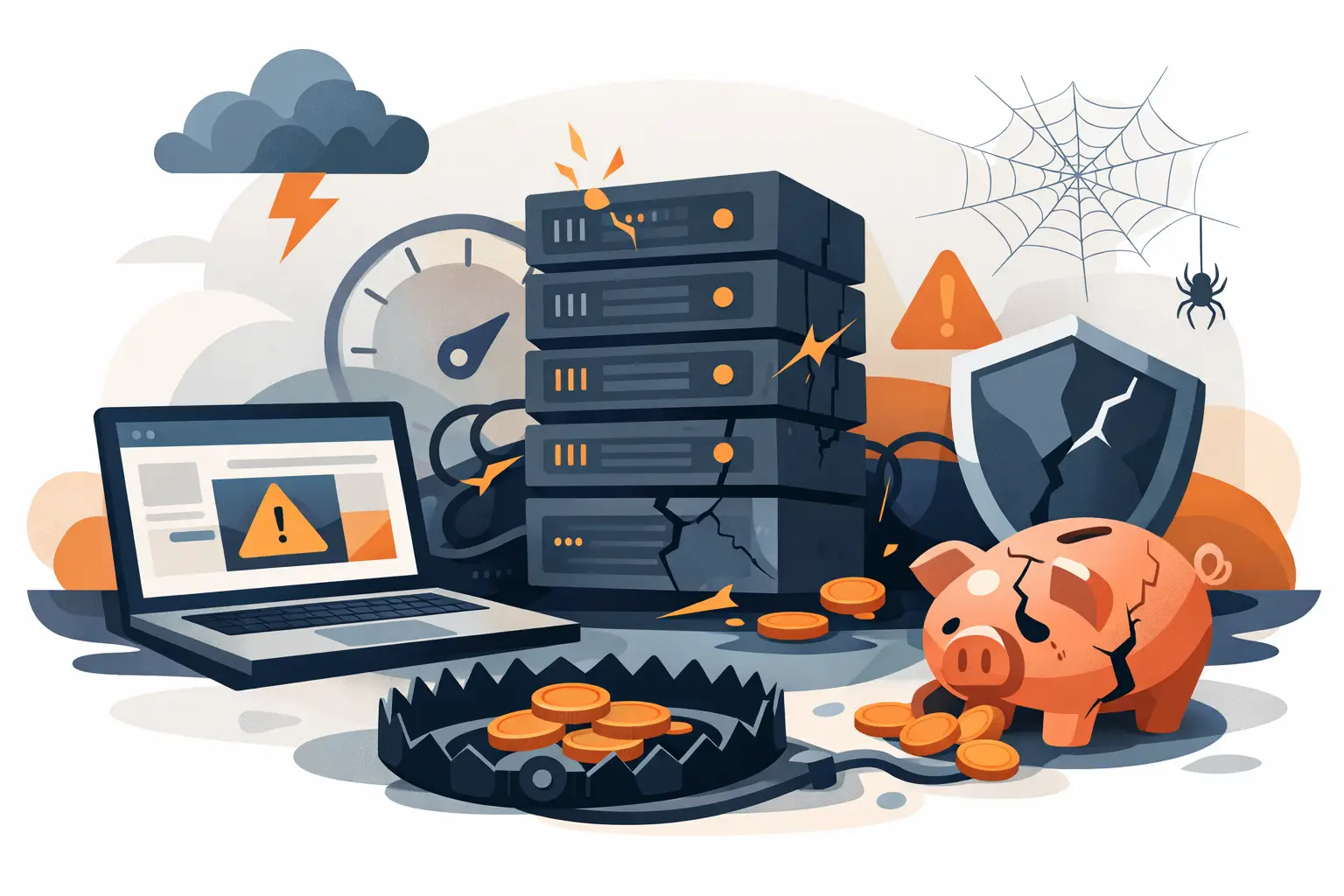
A hosting plan can look like a bargain at $1.99 per month until your website slows down during a sale, your renewal price jumps, or you cannot get help when something breaks. The hidden costs of cheap web hosting are rarely obvious on the pricing page, but they can affect your time, sales, search visibility, and customer trust.
Low-cost hosting is not automatically bad hosting. Many small websites do well on affordable shared plans. The key is understanding what is included, what is limited, and what may cost extra once your website starts to grow.
Why the Lowest Hosting Price Is Not Always the Lowest Cost
Hosting companies can advertise very low introductory prices because they expect customers to renew at a higher rate, add paid services, or move to a larger plan later. That is a normal part of the hosting business. The problem starts when essential features are unclear, performance is inconsistent, or support is difficult to reach.
For a personal blog with a few visitors, a basic plan may be all you need. For a freelance business, online store, local service company, or growing content site, hosting problems can become expensive quickly. A site that is unavailable, slow, or insecure does not simply create a technical inconvenience. It can cause missed inquiries, abandoned carts, and a less professional first impression.
The right question is not, “What is the cheapest plan today?” It is, “What will this plan cost me over the next year if I need speed, security, support, and room to grow?”
Hidden Costs of Cheap Web Hosting to Watch For
High renewal rates
A low first-term price is common, particularly when you pay for one, two, or three years upfront. But the renewal rate may be several times higher than the promotional price. If you only compare the first invoice, your budget can be caught off guard later.
Before purchasing, check the standard renewal price and the length of the promotional term. Also look at domain renewal pricing if you are registering a new domain with the same provider. A good deal should still make sense after the introductory period ends.
Essential features sold separately
Some entry-level hosting plans provide only the basics. Features such as automated backups, advanced email protection, malware scanning, site monitoring, and domain privacy may require paid add-ons.
There is nothing wrong with paying for services you genuinely need. The issue is paying for items you assumed were included. SSL certificates are a good example. Every business website should use HTTPS, so a free SSL certificate is a practical essential rather than a luxury feature.
Review the plan details before checkout. If a host charges extra for core protection or makes setup difficult, the low monthly price may not remain low for long.
Slow performance on crowded servers
Most affordable hosting is shared hosting, meaning multiple websites use resources on the same server. Shared hosting can be an efficient, cost-effective choice when it is managed well. However, very cheap plans may place too many accounts on one server or offer limited resources for each site.
That can lead to slow page loads, delayed dashboard access, and a website that struggles when traffic increases. Slow performance matters because visitors expect pages to load quickly. If your homepage, service pages, or checkout process takes too long, people may leave before they contact you or make a purchase.
You may eventually need to pay for performance upgrades, a more capable plan, or a migration to another host. Starting with SSD-powered hosting, clear resource limits, and a plan that can grow with your site can reduce that risk.
Downtime and lost opportunities
An uptime guarantee is more than a marketing phrase. Every period of downtime is a period when customers may be unable to find your information, submit a form, book a service, or buy from your store.
For a hobby site, a short outage may be frustrating. For a small business, it can mean a missed lead that never comes back. Frequent downtime can also create extra work as you respond to customer questions, troubleshoot errors, and worry about whether your website is available.
Look for a provider that states its uptime commitment clearly and has support available when problems happen. Hosting is an ongoing service, not a one-time purchase.
Limited or hard-to-reach support
Support is often the difference between a minor issue and a full day of lost work. Cheap hosting can mean limited support hours, long response times, or help that only points you to a knowledge base.
If you are comfortable managing servers, email records, file permissions, and database errors, that trade-off may be acceptable. Many website owners are not, and they should not have to become system administrators just to keep a website online.
Responsive technical support is especially valuable during a site migration, WordPress update, email outage, or security concern. A familiar control panel such as cPanel also helps because it gives you practical control over files, email accounts, databases, domains, and software installations without requiring advanced technical skills.
Backups that are missing, limited, or costly to restore
Backups are easy to overlook until you need one. A failed plugin update, accidental deletion, hacked account, or corrupted database can put your website at risk. Some budget plans do not include automatic backups. Others make backups available but charge a restoration fee or retain copies for only a short time.
Check how often backups run, how long they are stored, and whether restoring your site is included. For a business website, keeping an independent copy of important files and data is also a smart habit. Hosting backups are helpful, but your website is too valuable to depend on a single copy.
Security gaps and cleanup fees
Low-cost hosting may leave security largely in your hands. You might have to pay separately for malware cleanup, spam filtering, a web application firewall, or site monitoring after a problem has already happened.
Security does not guarantee that an attack will never occur. It does reduce risk and makes recovery easier. At a minimum, your host should make it straightforward to use SSL, keep your account protected, and get help if you notice suspicious activity.
A hacked website can cost more than a cleanup service. It can damage your reputation, interrupt advertising campaigns, and expose customer information. That is why basic security should be part of your hosting decision from the start.
Costs That Show Up When Your Website Grows
A plan that works for a new website may not work after your traffic, email use, or content library expands. This is not always a sign that the host has failed. Websites need more resources as they become more successful.
The concern is whether the provider clearly explains those limits and offers a reasonable path forward. Watch for restrictions on storage, database size, email sending, CPU usage, memory, inode counts, and the number of websites you can host. These details can affect WordPress sites, ecommerce stores, and businesses that use many email accounts.
Migration is another potential cost. Moving hosts takes time, planning, and sometimes professional help. Choosing a dependable provider early can help you avoid an emergency move caused by poor performance or unreliable support.
How to Compare Affordable Hosting Plans More Clearly
When comparing plans, look beyond the monthly price. A useful comparison includes the first-term total, renewal price, included SSL, backup options, storage type, support availability, uptime commitment, control panel, and upgrade options.
Ask whether the plan includes the features you need now. Then consider what happens if your traffic doubles, you add business email, install WordPress, or need to restore your website after an update. A provider such as Visiba that combines cPanel access, SSD-powered hosting, free SSL, one-click software installation, and always-available support can be easier to budget for than a plan built around add-ons.
You do not need enterprise hosting to run a professional website. You need a plan that matches your current needs and gives you a clear, affordable path when those needs change.
A Better Way to Choose a Hosting Plan
Affordable hosting should feel predictable. Read the plan details, confirm the renewal price, and make sure you understand which services are included before entering payment information. If a feature is essential to your website, do not assume it comes with the lowest tier.
A few dollars saved each month is helpful. But a hosting plan that keeps your website fast, protected, manageable, and supported can save far more when your business depends on being online.